
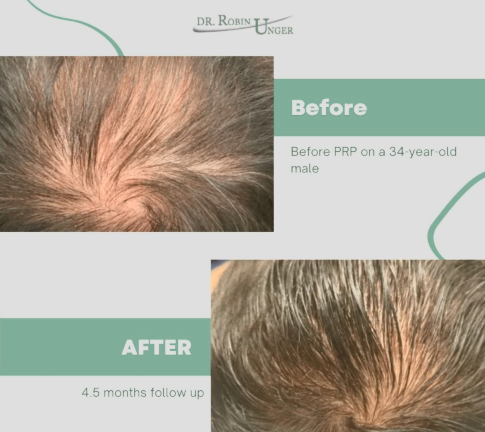
If you are researching PRP for hair loss in Manhattan or elsewhere in New York City, you may have encountered very different descriptions of the treatment. Some make it sound like a simple cosmetic add-on, while others promise dramatic regrowth. The reality is more nuanced.
Platelet-rich plasma therapy may support healthier, fuller-looking hair for some patients, but the diagnosis, preparation method, treatment technique, and condition of the existing follicles all matter. For patients considering PRP hair restoration in New York, the quality of the evaluation and protocol matters as much as the treatment name.
Unger Medical has been investigating and refining its PRP approach since 2010. Every recommendation begins with a careful evaluation because the right treatment depends on why your hair is thinning. A consultation for New York hair loss treatment can help you understand the cause of your thinning and determine which options may best suit your needs.
The Biology Behind PRP
PRP begins with a small sample of your own blood. The sample is processed to concentrate the platelet-rich portion, which contains proteins and growth factors involved in the body’s healing response. The preparation is then introduced into selected areas of the scalp. The goal is to support follicles that may be weakened or producing finer hairs. PRP cannot create follicles where none remain, and it is not a cure for every form of hair loss. Research suggests potential benefits for some patients with pattern hair loss, but protocols vary, and the evidence continues to evolve.
Why PRP Treatments Differ
The term “PRP” describes a category of treatment, not one universal formula. Practices may differ in how blood is processed, how concentrated the preparation becomes, how it is delivered, and how results are documented.
At Unger Medical, standardized photography provides a baseline for evaluating change. The treatment area is numbed for comfort, and PRP may be combined with carefully performed microneedling to activate the healing response while protecting existing hair. The protocol is personalized and reviewed before treatment.
Who May Be a Candidate?
PRP may be considered for men and women who have thinning hair but still retain viable follicles. A thoughtful evaluation includes a medical and hair-loss history, scalp examination, dermoscopy, review of previous treatments, and a clear discussion of goals and limitations.
PRP may be less useful when follicles are no longer present, an untreated medical issue is driving the loss, or another therapy is more appropriate. Sudden shedding, scalp inflammation, or patchy loss should be evaluated before regenerative treatment begins.
What to Expect
The appointment begins with a blood draw. The platelet-rich portion is prepared, the scalp is numbed, and the PRP is delivered to selected areas. Temporary tenderness, redness, or swelling may occur afterward.
Hair grows slowly, so progress is assessed over the following months. There is no single treatment schedule for everyone. Timing depends on the diagnosis, response, previous therapies, and whether PRP is being combined with another treatment.
Start With the Right Diagnosis
The best plan is not necessarily the one with the most treatments. It is the one based on an accurate diagnosis, realistic expectations, and careful follow-up.
At Unger Medical, every PRP recommendation begins with a thorough examination and an honest discussion of the potential benefits, limitations, and alternatives. If you are considering PRP for hair loss in NYC, schedule a consultation with Dr. Robin Unger to learn whether it belongs in your personalized treatment plan.
Book a Consult
Our Procedures